
Hi, this is Jiro.
Do you think the same thoughts again and again, trying to stop them but unable to?
Well, I do.
That’s why I read books about this phenomenon called chatter. Still unsatisfied, I came up with my own way of stopping it, which I call the inner voice lowering method.
I tried it on nearly one hundred people and found that it is simple and easy to practice. Better still, you know instantly whether you can do it or not.
The gist of my method is this.
Try to say inwardly, “How are you?”
First, cry it out at the top of your inner voice.
Next, say it very loudly.
Then loudly.
Next, without crying out, whisper it softly.
Then whisper it very, very softly.
For the last step but one, whisper it barely audibly inwardly.
And lastly, reduce your inner voice to zero volume.
All of this is done, of course, with your inner voice.
Did you get it?
Then try it! I’ll wait until you have.
Can you do it?
The funny thing is that nothing else changes even after you have done it. You register the same sensory data from outside—the same scenery, noises and bodily sensations, even fragments of thought—but now you feel as if there is a newly felt inner silence, free from annoying chatter, for as long as you can maintain it.
No one else can see or detect your inner silence, at least not yet. But you can, and you know that is good enough for you.
I became a member of this inner silence club, as it were, not through trying to reduce chatter.
I reached this vast territory through learning English, which led me into this world of silence by a narrow path between languages.
I’ll show you how. It won’t take long.
Now read a short passage of English aloud.
Any passage will do, as long as it is easy enough for you to read aloud comfortably without the help of translation.
Read it through aloud. If you managed it smoothly, you probably made no midway stops to translate it into Japanese.
Then read the same passage silently, but this time in a nonstop, very loud inner voice. OK?
Ready, GO!
Did you make it? If you read it nonstop, you probably translated none of it into Japanese along the way.
Now can you see what I mean?
Whether aloud or silently, reading directly in English means, at least for those moments, that your Japanese has gone quiet. Its volume has been turned down to zero.
I once had a chance to talk to a young author of a book on how to control the mind and body, who also leads workshops around Japan aimed at raising bodily awareness. I discussed with him my idea of reducing chatter by controlling the volume of the inner voice.
He seemed impressed by how simple and straightforward the idea was. His reaction gave me some confidence that I might be onto something.
I would like you to remember this little experiment of mine. It may help make your mental life more robust and richer—and it may even take your English learning a little further.
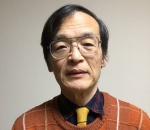
私立学校に英語教師として勤務中、40代半ばに差し掛かったころ、荒れたクラスを立て直す策として、生徒に公言して英検1級に挑戦することを思い立つ。同様の挑戦を繰り返し、退職までに英検一級(検定連合会長賞)、TOEIC満点、国連英検SA級、フランス語一級、スペイン語一級(文科大臣賞)、ドイツ語一級、放送大学大学院修士号などの成果を得る。
アメリカで生徒への対応法を学ぶ為に研修(地銀の助成金)。最新の心理学に触れた。4都県での全発表、勤務校での教員への研修を英語で行う。現在も特別選抜クラスの授業を全て英語で行っている。「どうやって単語を覚えればいいですか?」という良くある質問に答える為、印欧祖語からの派生に基づく「生徒には見せたくない語源英単語集」を執筆中。完成間近。常日頃洋書の読破で様々な思考にふれているが、そうして得た発想の一つを生かして書いた論文がコロナ対策論文として最近入賞。賞品の牛肉に舌鼓をうっている。元英検面接委員