
日本語版はこちら
↓ ↓ ↓

✨ The Amida Lottery and English Words
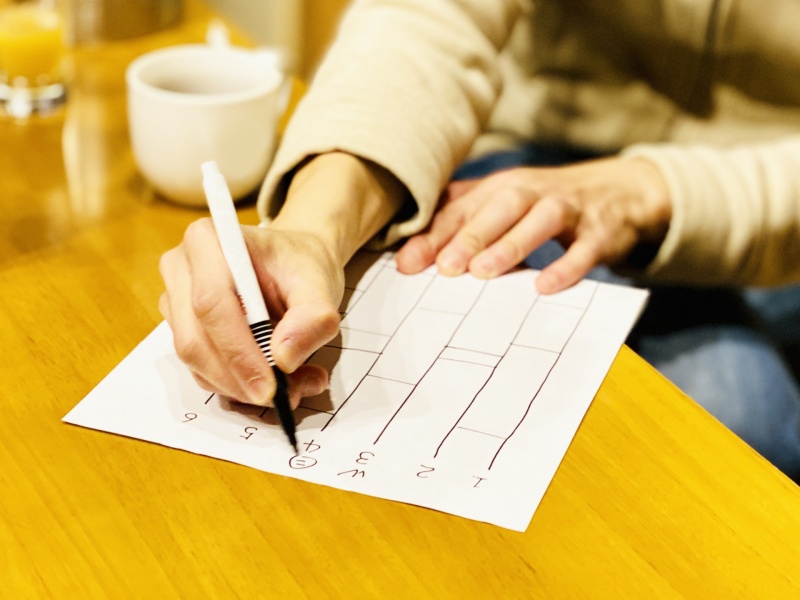
Do you know the Amida lottery (あみだくじ), which we often used at school to decide who cleans which part of the classroom?
Did you know it has a connection with Amida Buddha, and even with the English language?
In the old days, the Amida lottery had a round shape. There were many starting points around the center, and only one lucky goal on the outside.
Because this shape looked like the shining halo of Amida Buddha, people in the Edo period began to call it the “Amida lottery.”
Perhaps people felt that Amida’s kind and compassionate heart made the game even more special.
The name Amida itself comes from the Sanskrit word meaning “immeasurable.”
This Sanskrit word is also related to an ancient root from the Proto-Indo-European language, which is the ancestor of many languages — including Sanskrit and English.
From that old root “MED” (to measure), English got many words such as:
・medicine
・month
・moon
・middle
Let’s look at them one by one:
Medicine helps us measure and restore health.
The moon, with its regular changes, was once used to measure time — that’s why we have the word “month.”
And you can’t find the middle of something unless you measure both ends.
So today, we traced some interesting connections —
between the Amida lottery and Amida Buddha,
and between Amida’s name and some English words.
It’s like we followed a big, invisible Amida lottery that connects languages and ideas across time.
I hope you enjoyed this little trip, and I look forward to taking another one with you soon!

私立学校に英語教師として勤務中、40代半ばに差し掛かったころ、荒れたクラスを立て直す策として、生徒に公言して英検1級に挑戦することを思い立つ。同様の挑戦を繰り返し、退職までに英検一級(検定連合会長賞)、TOEIC満点、国連英検SA級、フランス語一級、スペイン語一級(文科大臣賞)、ドイツ語一級、放送大学大学院修士号などの成果を得る。
アメリカで生徒への対応法を学ぶ為に研修(地銀の助成金)。最新の心理学に触れた。4都県での全発表、勤務校での教員への研修を英語で行う。現在も特別選抜クラスの授業を全て英語で行っている。「どうやって単語を覚えればいいですか?」という良くある質問に答える為、印欧祖語からの派生に基づく「生徒には見せたくない語源英単語集」を執筆中。完成間近。常日頃洋書の読破で様々な思考にふれているが、そうして得た発想の一つを生かして書いた論文がコロナ対策論文として最近入賞。賞品の牛肉に舌鼓をうっている。元英検面接委員